Trading Room - Forex signals a
- 4.5
- Rating
- 100.00K
- Installs
- Free
- Price

 Analysis by App-foxy
I approached Trading Room as a practical finance app rather than a replacement for a full trading platform. Its focus is simple: it brings trading ideas into one place and adds an FX heatmap for reading currency-market strength and weakness. That makes it most interesting for someone who already follows the markets and wants a faster way to organize research before opening a position elsewhere.
My first impression was that the app is built around decision support, not execution. You are not being handed a complete investing environment with every possible chart, order type, and portfolio tool. Instead, the useful question is whether its daily ideas and visual currency analysis can improve the way you prepare. For me, that distinction matters because a signal can be a starting point for research, but it should never become an automatic instruction to risk money.
How Trading Room fits into a real trading routine
Finansoft Ltd presents this as a free finance app, and the basic download is accessible without an upfront purchase. It is rated for Everyone, runs on Android from version 7.1 onward, and the current version is 2.9. Those details make it relatively easy to try on an older spare phone or a device that is not running the newest operating system.
You May Also Like

 Blood Strike: 2.5 Anniversary
Blood Strike’s Loadouts Turn Every Drop Into a Tactical Gamble
A close look at Blood Strike’s custom loadouts: how fast access to signature weapons reshapes its battle royale rhythm, rewards preparation, and narrows the gap between fights.

 Pandora - Music & Podcasts
Pandora’s Music Is Easy to Start, but Harder to Recover
Pandora’s strength is its low-effort path from a seed to a station. Its weak spot is how much confidence it asks you to place in connection, setup, and quiet recovery.

 8 Ball Pool
 Is Built on Rivalries, Rematches, and Routine
A close look at the rivalries, rematches, shared routines, and unanswered safety questions that turn a quick pool match into a persistent mobile community.

 Samsung Music
’s Quiet Strength Is Playing What You Already Own
Its reach comes less from spectacle than from dependable access to a personal library. That simplicity is both the app’s strongest retention engine and its ceiling.

 AccuWeather: Weather Radar
AccuWeather Review: A Quick, Clear Forecast for Everyday Decisions
For everyday plans, the best forecast is the one you can understand quickly. AccuWeather makes rain timing, radar, and local conditions easy to act on, with a few trade-offs.

 Hill Climb Racing
Why Hill Climb Racing Still Turns Crashes Into One More Run
A tiny car, a bumpy hill and one more upgrade: Hill Climb Racing keeps resurfacing because its simple chaos makes every near-miss feel personal.
More From Our News Desk



The app has reached more than 100,000 installs and holds a 4.5 average from roughly 2,600 ratings. That gives it a useful level of public adoption without making it look like a mainstream banking tool. I would still judge it by how well it supports my own process, because popularity does not tell me whether a particular signal style matches my risk tolerance or trading timeframe.
In everyday use, I would open it during a morning market review, scan the available ideas, and then compare them with a separate charting or brokerage app. The important habit is to treat the screen as a shortlist. Before acting, I would check the instrument, direction, entry context, invalidation point, market conditions, and whether the idea still makes sense after the time it took me to review it.
What the daily ideas are actually good for
The strongest use case is reducing the blank-page problem. When I sit down to study foreign exchange, there can be many currency pairs and several possible timeframes. A stream of ideas gives me candidates to investigate instead of forcing me to search randomly. That can save time, especially when I have a limited window before work or during a lunch break.
There is also a psychological benefit when the app is used correctly. It can encourage a repeatable watchlist routine: review the idea, write down why it might work, identify what would disprove it, and then decide whether it deserves attention. That is much healthier than opening a position simply because a notification or headline looks confident.
One less obvious workflow is to use the ideas retrospectively rather than immediately. I can review a previous setup, compare its reasoning with the later chart, and note whether I misunderstood the market or simply ignored the risk. This turns the app into a study aid. It is not as exciting as chasing a fresh signal, but it is more useful for building judgment.
The FX heatmap is the part that adds context
The FX heatmap is more valuable to me than a long list of isolated suggestions because it helps frame currency movement as a relationship. Instead of looking at one pair in isolation, I can look for broader strength or weakness and then ask whether a proposed trade agrees with that picture. That extra layer can prevent a narrow reading of one chart.
A practical example would be a busy weekday morning when I notice an idea involving a major currency pair. I would first inspect the heatmap to see whether the suggested direction fits the wider picture. Then I would move to my preferred charting tool, check the relevant timeframe, and look for a sensible level at which the idea would no longer be valid. If the heatmap and chart disagree, I would usually wait rather than force a trade.
The heatmap should not be confused with a complete explanation of why a currency is moving. Visual strength can change quickly, and a color-based overview may hide differences between timeframes or individual pairs. Its real strength is prioritization: it helps me decide where to look first. Its weakness is that it cannot replace the deeper context I need before risking capital.
What the current version means for existing users
Version 2.9 suggests that the app is at a mature enough stage to have moved beyond an early prototype, but I would not interpret the version number as proof of a particular feature roadmap. What matters to an existing user is whether the current release keeps the central workflow clear: ideas should be easy to inspect, and the heatmap should be useful without making the screen feel crowded.
For someone who has already built a routine around the app, the main benefit of staying with it is continuity. Familiarity can make a research process faster. I know where to look, how to compare an idea with the broader currency view, and when to move to another tool for confirmation. That efficiency is more important than having a long list of features I would rarely use.
At the same time, existing users should avoid allowing convenience to become dependence. If I check the app first every day, I can gradually start seeing the market only through its selection. To counter that, I would occasionally begin with my own watchlist, then use the app to challenge or refine it. That small change keeps the tool in a supporting role rather than letting it define every opportunity I notice.
Where it compares well with usual alternatives
Compared with manually browsing social feeds, Trading Room feels more focused. Social platforms mix analysis with opinion, promotion, and noise, while this app is centered on trading ideas and the currency heatmap. That narrower purpose is helpful when I want a quick research session rather than a stream of unrelated market commentary.
Compared with a full broker application, it is better viewed as a companion. A brokerage app is normally where I monitor holdings, manage orders, and handle account activity. Trading Room is more relevant before that stage, when I am deciding which market deserves attention. I would not choose it instead of a broker, and I would not expect it to provide the same depth as a dedicated charting package.
Compared with building a personal spreadsheet of ideas, the app is quicker to consult but less tailored to my own rules. A spreadsheet can record risk, outcomes, notes, and mistakes in exactly the format I want. Trading Room gives me a ready-made starting point, but I still need my own journal if I want to measure whether following its ideas actually improves my decisions.
That trade-off explains who will appreciate it. A newer trader who wants a shortcut to certainty may be disappointed, because no heatmap can remove uncertainty. An experienced trader may find it useful as a screening layer, provided the app’s ideas fit an existing strategy. Someone who only invests in long-term funds or stocks may have little reason to install a tool centered on foreign exchange.
Costs, expectations, and responsible use
The app is free to download, but it includes in-app purchases ranging from $15.99 to $79.99 per item. I would pay close attention to what any optional purchase unlocks before committing, especially if I am still deciding whether the app fits my routine. A free entry point is convenient, but the value of a paid option depends on whether it improves my research enough to justify the expense.
I would also avoid judging a purchase by the number of ideas alone. More alerts do not automatically mean better decisions. The useful question is whether the information is clear, timely enough for my trading style, and easy to evaluate against a defined risk plan. If I cannot explain why an idea fits my strategy, paying for additional access would not solve the underlying problem.
Because this is a finance app, the most important limitation is not a missing button; it is the unavoidable uncertainty of markets. Ideas can fail, currency relationships can change, and an attractive setup can become poor before I have time to act. I would never use borrowed money or money needed for everyday expenses based solely on an app suggestion. The app can support research, but responsibility for the trade remains with me.
Small habits that make the app more useful
My first tip is to separate discovery from execution. I would scan the ideas once, select only a few candidates, and then close the app while I verify them elsewhere. This prevents repeated refreshing from turning into impulsive activity. It also makes it easier to notice whether I am choosing ideas because they fit my method or simply because they are the newest ones on screen.
My second tip is to record the heatmap context beside each idea. A short note such as “broad currency strength agrees” or “pair-specific move only” can be more valuable later than a screenshot. Over time, this helps reveal whether I perform better when the wider market view supports the idea or when I deliberately trade against it.
My third tip is to define the exit logic before becoming interested in the entry. If I cannot state what would make the idea wrong, I am not ready to act. This is especially important with signal-oriented apps, because the presentation can make an opportunity feel more complete than it really is. The heatmap can help with selection, but it does not decide position size or acceptable loss for me.
A fourth useful approach is to use the app at a fixed time instead of checking it constantly. For a person with a full-time job, a planned review before the trading session may be more realistic than trying to react to every market change. If my strategy depends on very fast movement, this app may not be the right primary tool; a real-time charting and execution setup would be more appropriate.
Remaining gaps I would keep in mind
The streamlined focus is also the main limitation. I would not expect the app alone to provide the complete research trail I need for a serious decision. I still want independent charts, economic context, a trade journal, and a broker with suitable order controls. Moving between several tools adds friction, but that friction is preferable to pretending one signal screen can cover every part of trading.
There is also a risk of false precision. A neatly presented idea may feel objective even when the market situation is ambiguous. I would be cautious if I found myself describing a setup as “the app’s trade” rather than as a hypothesis I had tested. That change in language sounds minor, but it affects how quickly I question a losing position.
Another gap is personal fit. A signal that suits a short-term trader may not suit someone who checks markets once a day, and a currency heatmap can look different depending on the timeframe being considered. I would therefore test the workflow with observation first, keeping notes without placing trades, before deciding whether it deserves a permanent place in my routine.
What I would watch as the app evolves
For future use, I would watch whether new releases continue improving clarity rather than simply adding more information. The most meaningful progress would be anything that helps me understand an idea’s context, compare it with the heatmap, and review what happened afterward. I would value better learning support more than a busier stream of suggestions.
I would also pay attention to how well the app serves both newcomers and experienced users without encouraging overconfidence. Clear explanations can help a beginner learn, while experienced traders need efficient filtering and enough context to make their own judgment. If the interface ever makes the ideas feel like guaranteed calls, that would reduce my confidence even if the feature list became larger.
Finally, I would reassess any paid option against actual results in my workflow. The right test is not whether I enjoy browsing more content; it is whether I make more disciplined decisions, avoid unsuitable setups, and spend less time searching without becoming more impulsive. If the answer is no, the free access may be sufficient, or another research tool may be a better match.
My final take
I see Trading Room as a focused companion for foreign-exchange research. Its daily ideas can help me build a shortlist, while the FX heatmap adds a broader view that isolated signals often lack. The app is particularly useful for traders who already have a charting and execution process and want a compact way to discover markets worth investigating.
I would not recommend it as a complete trading solution, and I would not suggest following its ideas blindly. People looking for portfolio management, detailed chart construction, or direct order handling should choose tools designed for those jobs. But if you want a free starting point for structured market scanning, are willing to verify every idea, and understand the risk involved, this app is worth trying. Its best role is not telling me what to trade; it is helping me decide what deserves a closer look.
FAQs for Trading Room - Forex signals a
01What is Trading Room - Forex signals and how does it work?
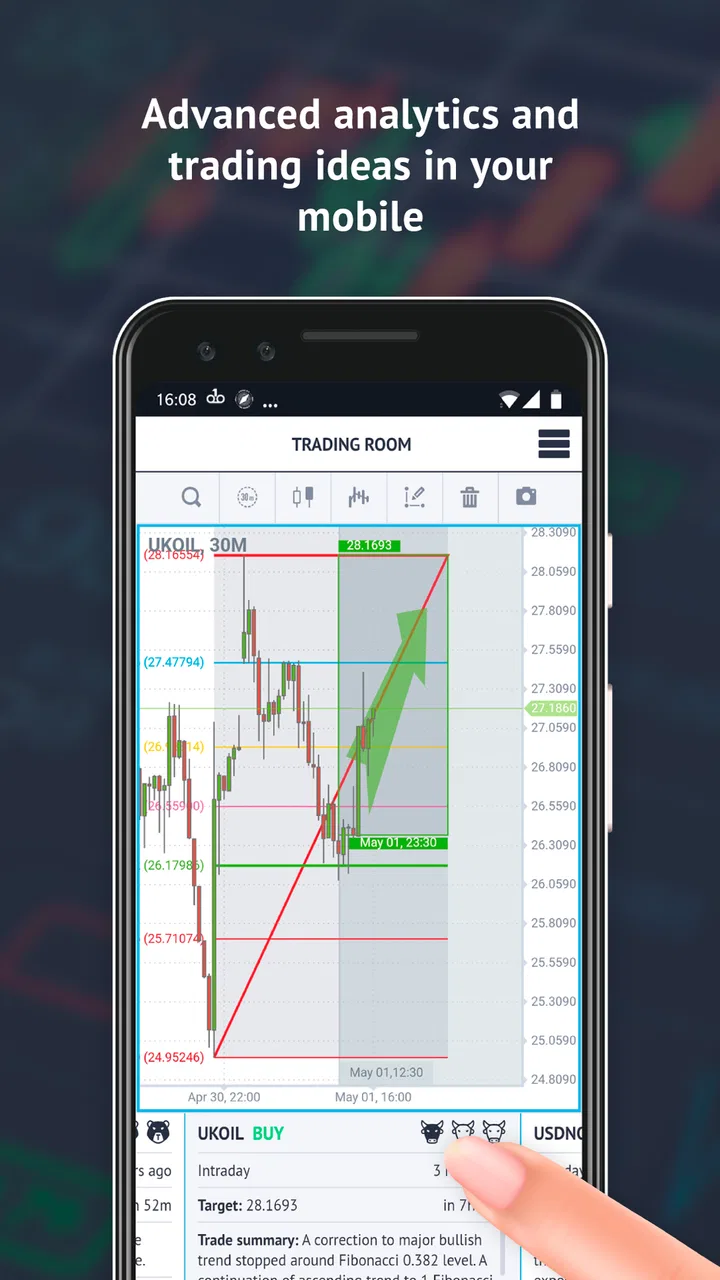
Trading Room - Forex signals is designed to provide users with market updates, currency-trading ideas, and alerts that may help them follow potential opportunities in the forex market. After opening the app, users can review available signals, including the currency pair, suggested entry area, stop-loss information, and possible targets when provided. It should be treated as an information tool, not an automatic guarantee of profitable trades.
02Are the forex signals accurate, and can I rely on them to make money?
No forex signal service can guarantee accurate predictions or consistent profits. Currency prices can change quickly because of economic news, market volatility, liquidity, and unexpected events. During a review, the app is best understood as a research aid that may support a trading plan rather than replace one. Users should verify each signal, consider the wider market context, and never risk money they cannot afford to lose.
03Is Trading Room - Forex signals suitable for beginners?
Beginners may find the app useful for becoming familiar with currency pairs, trading terminology, and the way entry, target, and stop-loss levels are presented. However, the application does not remove the need to understand leverage, spreads, margin, volatility, and risk management. New traders should first practice with a demo account, learn how orders work, and avoid copying signals blindly before using real funds.
04Does the app place trades automatically, or do I need a separate broker?
Trading Room - Forex signals should generally be viewed as a signal and market-information application rather than a complete brokerage platform. Users normally need a separate, properly regulated broker account to execute trades, and they must enter or manage orders themselves unless a clearly stated integration is available. Before following any instruction, check the signal details, trading costs, execution conditions, and compatibility with your broker.
05Is Trading Room - Forex signals free to download, and are there extra costs?
The download may be free, but some features, signal groups, premium content, or subscription plans can require payment depending on the current version and the developer’s pricing model. Users should review the app-store listing, in-app purchase section, renewal terms, and privacy information before subscribing. Remember that broker fees, spreads, commissions, currency-conversion charges, and potential trading losses are separate from the app’s cost.
Pros
- Clear forex signals with entry
- stop-loss
- and take-profit levels.
- Useful for traders who want ideas without constant market monitoring.
- Covers multiple currency pairs and potential market opportunities.
- Simple interface makes signal details quick to find and review.
- Can support learning by showing how trade setups are structured.
Cons
- Signals are not guaranteed and may lead to losses in volatile markets.
- Some features or signals may require a paid subscription.
- Timing delays can reduce the usefulness of fast-moving trade alerts.
- Limited context may make signals difficult for beginners to evaluate.
- Requires disciplined risk management and should not replace personal research.

Trading Room - Forex signals a
Gallery